02 · Understand · Research dashboard
From a national dataset to one animal’s story.
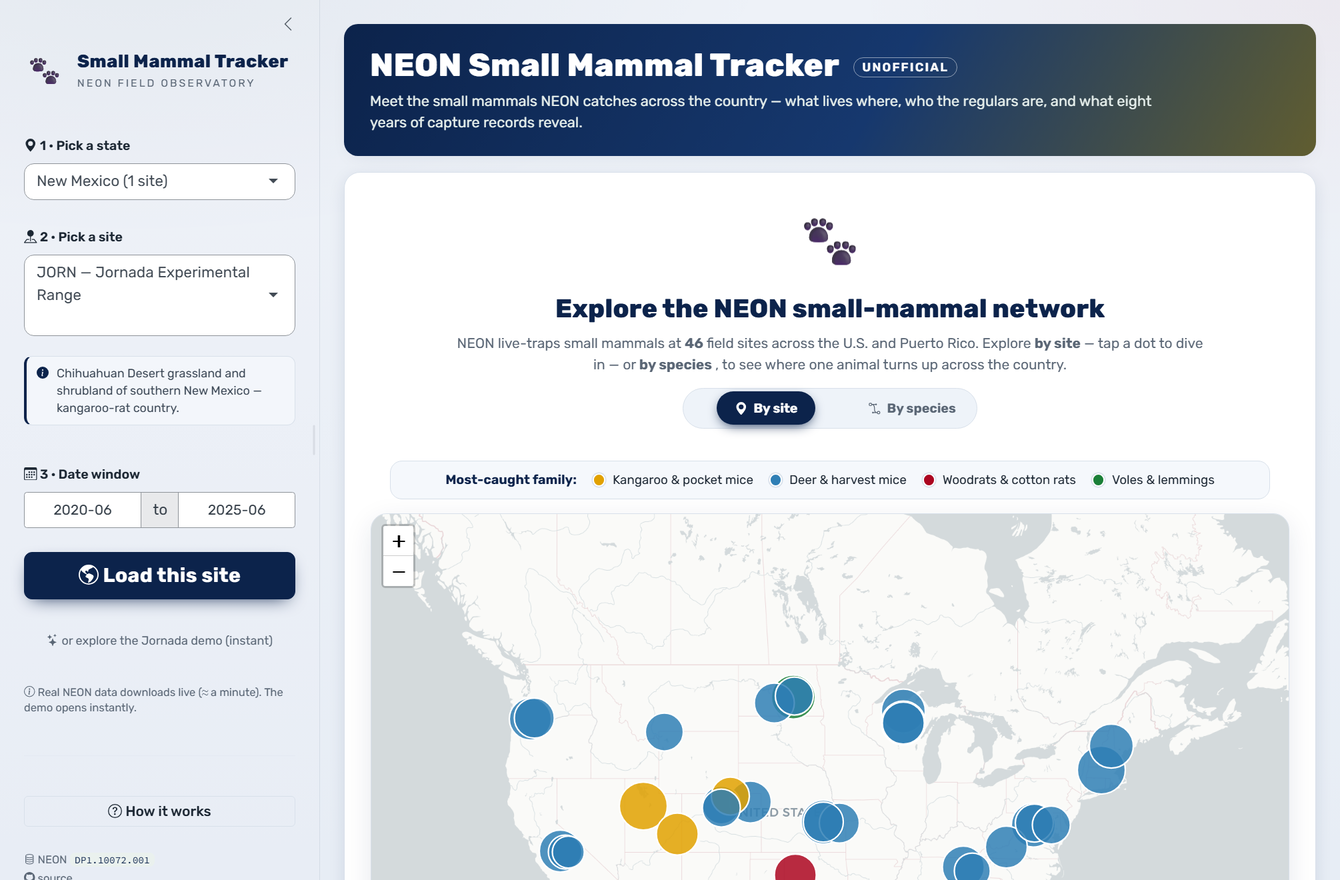
The NEON Small Mammal Tracker makes roughly 178,000 public box-trapping capture records explorable—from a map of field sites to the recapture history of an individual ear-tagged animal.
The problem
Open data is not automatically approachable data.
NEON’s public small-mammal product is rich enough to support ecological questions at multiple scales. The raw records are also too detailed for a visitor who simply wants to know what lives at a site, how often an animal returned, or how captures changed over time.
The challenge was to preserve the scientific caveats while giving each kind of visitor a clear first move.
The solution
Layer the questions from simple to specific.
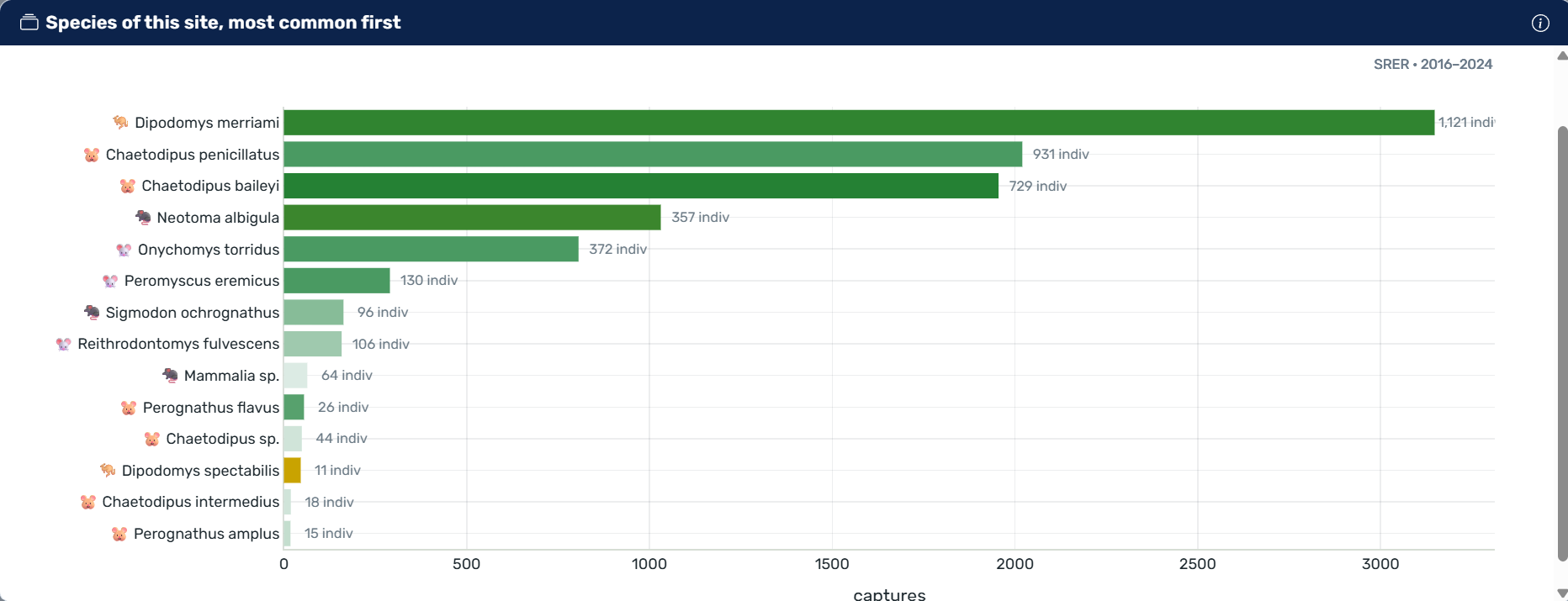
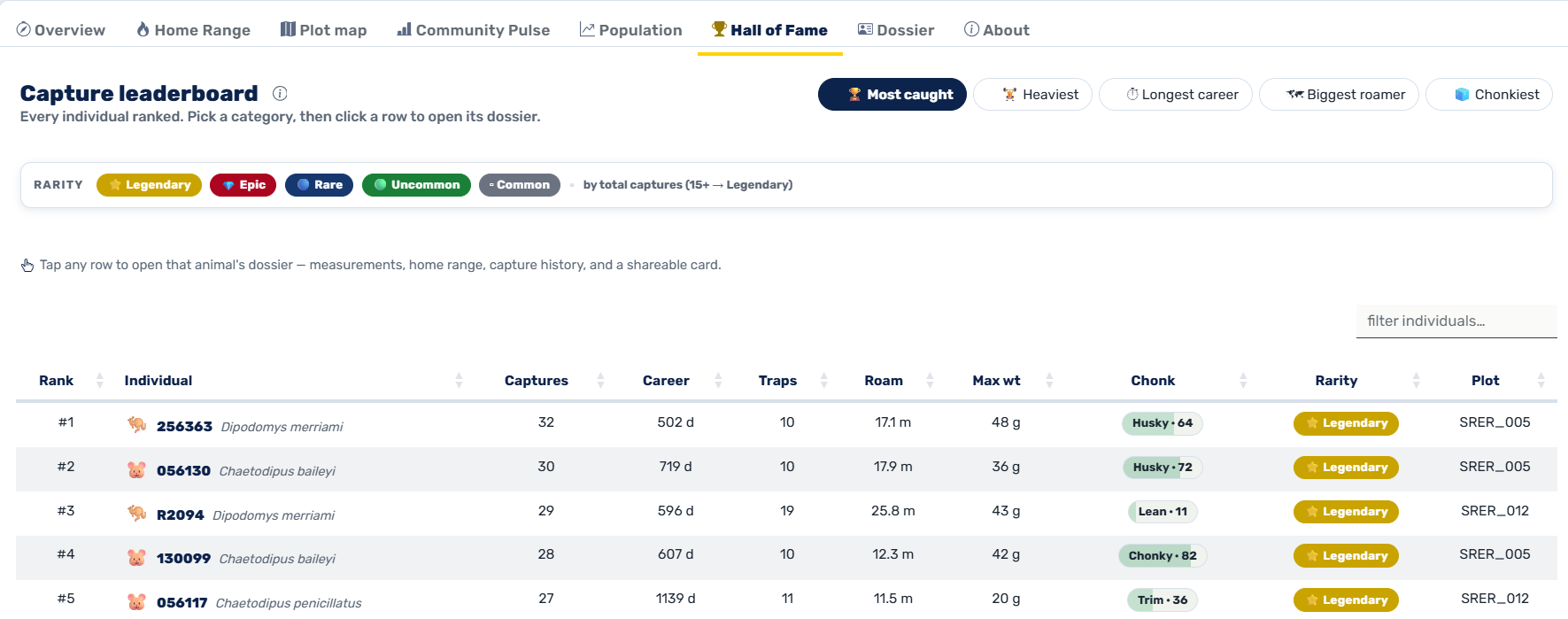
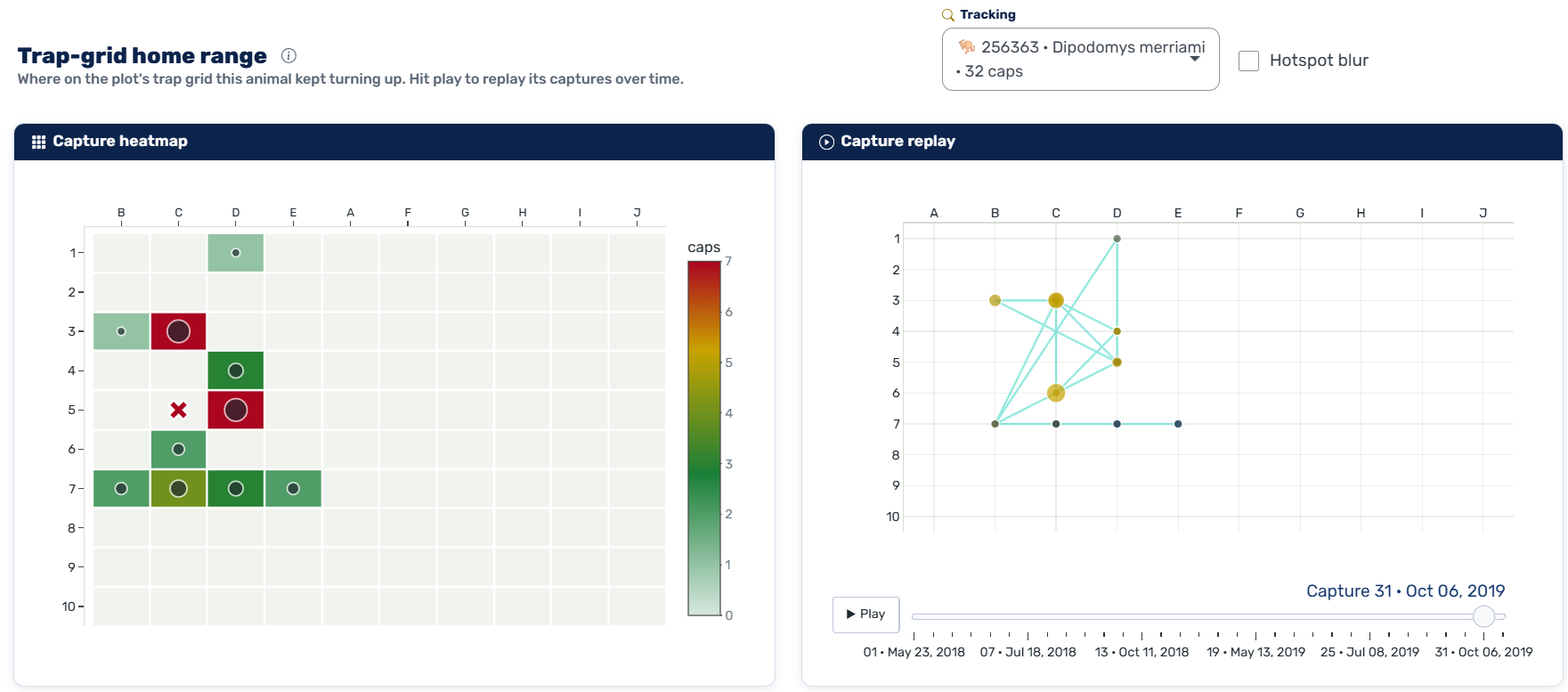
Visitors can begin with a site or a species, then move into composition, individual leaderboards, body-size patterns, trap-grid home ranges, diversity, and detection-corrected abundance.
Plain-language summaries sit beside the charts. Method notes identify reused ear tags, genus-only records, lower-bound richness estimates, confidence intervals, and the distinction between observed animals and model-based population estimates.
Defensible proof
The method is visible alongside the result.
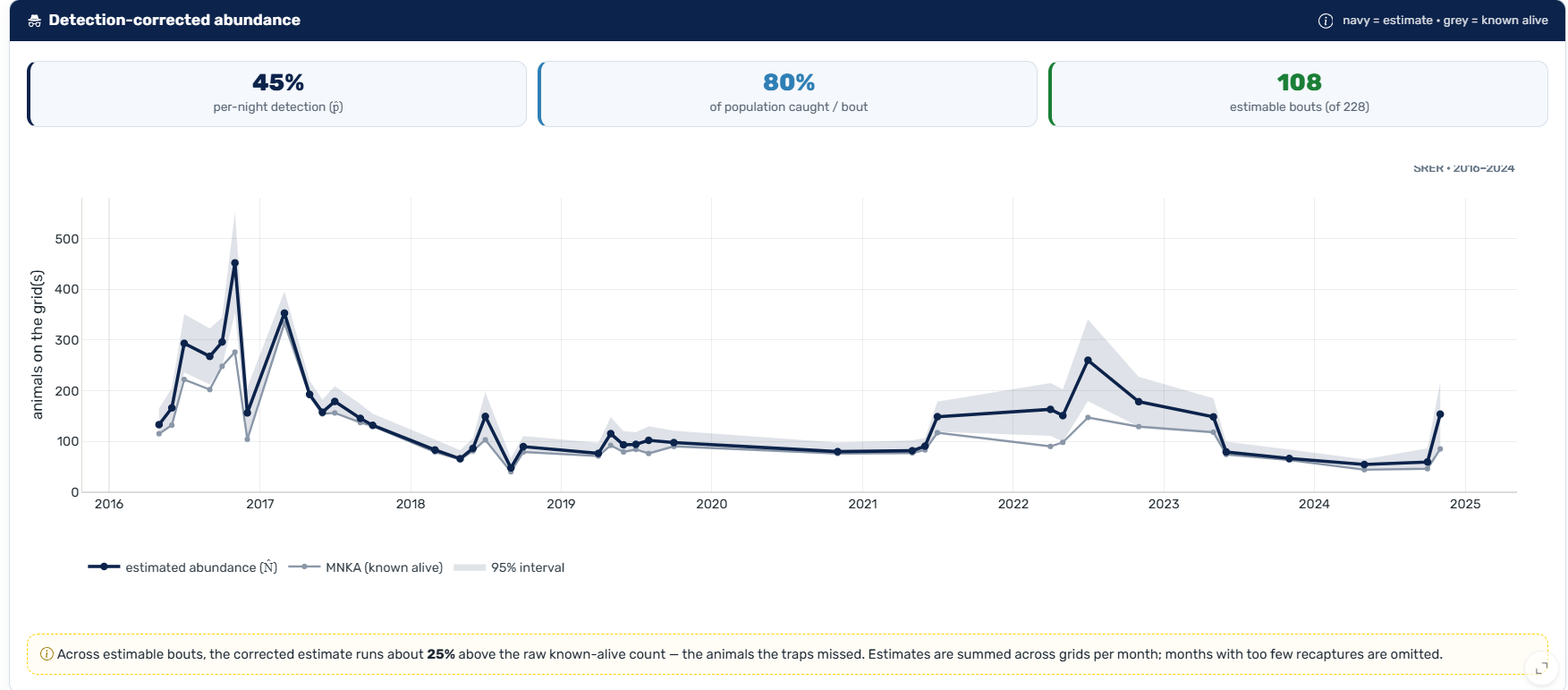
The app is live, works on mobile, and is built from public NEON small-mammal box-trapping data (DP1.10072.001). Visitors can inspect the same site through several views and compare raw observed counts with detection-corrected estimates rather than treating them as interchangeable.
Technical details
The application is built in R Shiny. Each site’s records are pre-bundled into compressed R data files so common interactions do not need a network round trip. A scheduled GitHub Action rebuilds the data bundle from the public source.
Closed-capture estimates use Schnabel or Chapman approaches where appropriate. The interface presents uncertainty and known data limitations rather than collapsing them into a single authoritative-looking number.